📝 Daily UPSC Current Affairs Compilation – 4th September 2026
1. Cabinet Approves ‘Digital Agriculture Mission’
Syllabus: GS-III (Agriculture, E-Technology in the aid of farmers)
Context: The Union Cabinet has approved a massive ₹14,235 crore outlay for seven agricultural schemes, with the flagship being the ‘Digital Agriculture Mission’ (DAM) worth ₹2,817 crore.
Key Highlights & Analysis:
The Digital Agriculture Mission aims to create a unified ‘Agri Stack’ by consolidating databases from across States and Union Territories. It includes a comprehensive registry of farmers, detailed village land maps, and crop sown registries. Furthermore, the ‘Krishi Decision Support System’ will integrate remote sensing, soil, and weather data. A highly ambitious sub-component includes mapping the soil profile of 142 million hectares of agricultural land on a 1:10,000 scale. For UPSC Mains, this represents a monumental shift from traditional farming to precision agriculture, aiming to fix structural leakages in subsidy distribution, improve climate resilience, and utilize data-driven insights to prevent post-harvest losses.
2. PM’s Visit to Brunei Amidst South China Sea Tensions
Syllabus: GS-II (International Relations, Act East Policy)
Context: The Prime Minister became the first Indian premier to hold bilateral talks in Brunei, a critical player in Southeast Asia, amidst escalating geopolitical tensions in the South China Sea.
Key Highlights & Analysis:
Beyond establishing a space cooperation pact, the bilateral dialogue heavily focused on defense ties, energy security, and securing freedom of navigation. Brunei’s strategic location makes it an essential anchor for India’s “Act East Policy” and Indo-Pacific maritime strategy. By deepening security and economic relations with ASEAN nations like Brunei and Singapore, India is actively projecting itself as a reliable security partner and a counterbalance to aggressive regional maneuvers by China. This visit underscores the transition of India’s foreign policy from simply “Looking East” to actively engaging in military and strategic partnerships in the region.
3. Launch of ‘Vishvasya’ – The National Blockchain Framework
Syllabus: GS-III (Science & Technology, Cyber Security, E-Governance)
Context: The Ministry of Electronics and Information Technology (MeitY) officially launched the “Vishvasya — Blockchain Technology Stack” to revolutionize digital governance.
Key Highlights & Analysis:
Developed indigenously, Vishvasya offers “Blockchain-as-a-Service” (BaaS) utilizing geographically distributed National Informatics Centre (NIC) data centers in Bhubaneswar, Pune, and Hyderabad.This allows various government entities to deploy secure, permissioned blockchain applications without building parallel infrastructure. The implications for e-Governance are profound: blockchain guarantees tamper-proof record-keeping, which is vital for property registration, educational certificates, and direct benefit transfers. By providing open APIs, the government aims to eliminate data silos and build unprecedented digital trust in public service delivery.
4. India’s Vision for Global AI Governance at the UN
Syllabus: GS-II (Global Groupings) & GS-III (Artificial Intelligence)
Context: Ahead of the UN’s ‘Summit of the Future’, Indian strategic circles are actively shaping the discourse on the Global Digital Compact (GDC), pushing for equitable AI governance.
Key Highlights & Analysis:
The global AI narrative is currently dominated by a bipolar contest between the US and China, often marginalizing the unique developmental needs of the Global South. Developed nations focus heavily on “risk mitigation,” while India argues for “capacity building and inclusive growth”. India is advocating for democratized access to AI computing infrastructure, high-quality datasets, and technology transfers. Drawing parallels to climate change negotiations, India insists that AI governance must reflect “Common but Differentiated Responsibilities,” ensuring that AI frameworks do not become another tool for technological neo-colonialism.
5. Constitution of the 23rd Law Commission of India
Syllabus: GS-II (Polity & Governance, Constitutional/Statutory Bodies)
Context: The Central Government officially notified the establishment of the 23rd Law Commission for a three-year tenure.
Key Highlights & Analysis:
The Law Commission is a non-statutory, executive body that plays a pivotal role in legal reform, reviewing obsolete laws, and advising on complex legal matters. The 23rd Commission assumes office at a critical juncture, as it is expected to tackle highly sensitive mandates, including potential frameworks for the Uniform Civil Code (UCC) and simultaneous elections (“One Nation, One Election”). Understanding the recommendations and the socio-legal impact of the Commission’s reports is vital for questions relating to the evolution of India’s judicial and legislative ecosystem.
6. Historic Peace Pact with Tripura Insurgent Groups
Syllabus: GS-III (Internal Security, Extremism)
Context: The Centre and the Tripura State Government signed a landmark peace agreement with two major insurgent factions—the NLFT and ATTF.
Key Highlights & Analysis:
This tripartite agreement represents a significant milestone in bringing lasting peace to the Northeast, ending decades of armed rebellion. The groups have agreed to abjure violence, surrender their cadres, and join the democratic mainstream. In return, the government has committed to special developmental packages for indigenous tribal communities. For internal security dynamics, this reflects the success of the government’s dual-track approach: intense counter-insurgency operations coupled with open doors for political dialogue and economic rehabilitation.
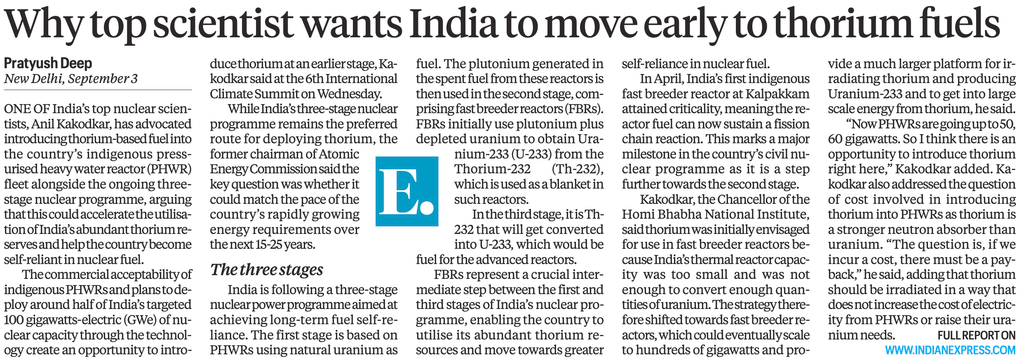
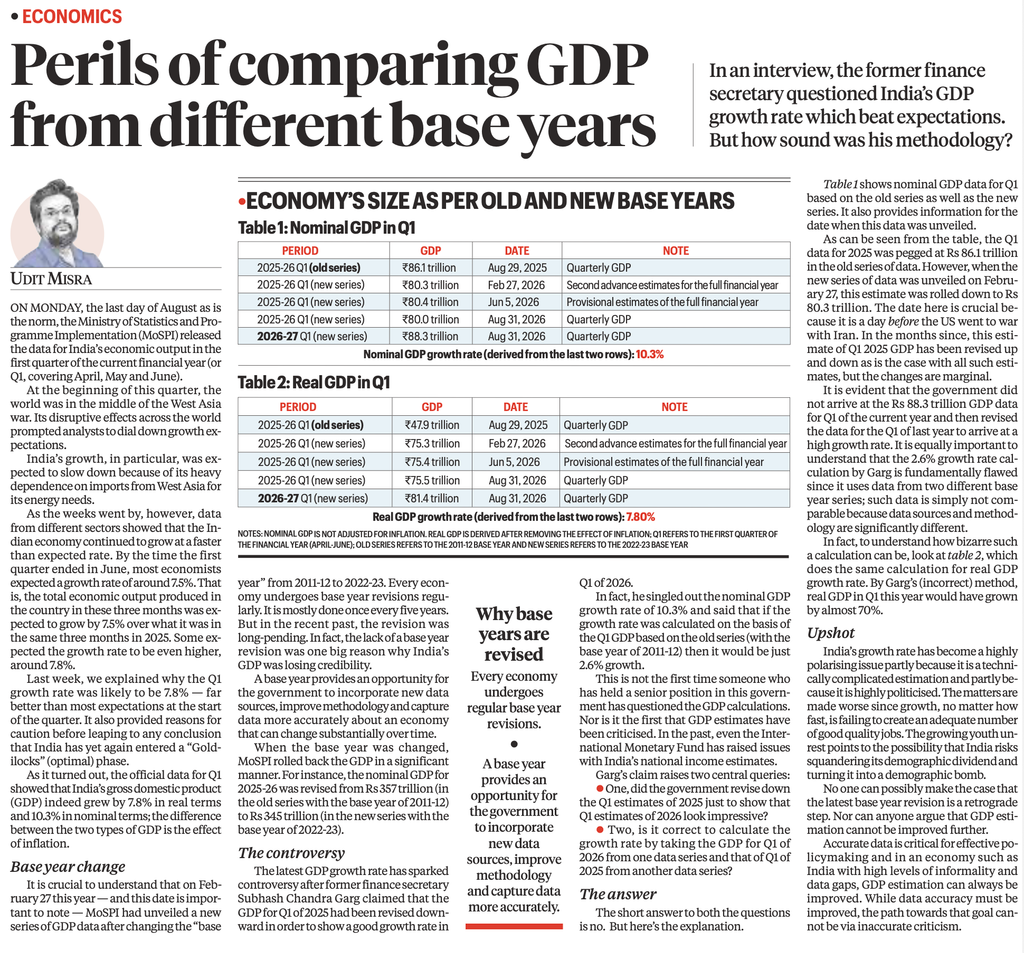
7. World Bank Upgrades India’s GDP Forecast to 7%
Syllabus: GS-III (Indian Economy, Growth & Development)
Context: The World Bank revised India’s GDP growth projection for the fiscal year 2024-25 upward from 6.6% to 7%.
Key Highlights & Analysis:
This upward revision signals robust confidence in India’s macroeconomic fundamentals, driven primarily by intense government capital expenditure (Capex), a resurgence in rural consumption, and strong performances in the manufacturing and construction sectors. However, the World Bank also highlighted critical structural challenges: the pace of export-linked job creation has declined, implying India might be missing the immediate post-China manufacturing shift. This data point is crucial when analyzing the effectiveness of PLI schemes and the overarching challenge of “jobless growth.”
8. Harnessing Biotech: The BioE3 Policy
Syllabus: GS-III (Science & Technology, Bio-technology, Environment)
Context: The government’s recent push toward the BioE3 (Biotechnology for Economy, Environment, and Employment) policy aims to foster a sustainable bio-economy.
Key Highlights & Analysis:
The BioE3 policy focuses on high-performance bio-manufacturing, accelerating the shift from chemical-based industries to sustainable, biological alternatives. Key pillars include developing smart proteins, bio-based chemicals, climate-resilient agriculture, and carbon capture innovations. This policy is essentially India’s roadmap to achieving its “Net Zero” targets by 2070 while simultaneously creating a multi-billion-dollar bio-economy that generates specialized green jobs.
9. Food Safety and Irradiation Infrastructure Push
Syllabus: GS-III (Food Processing, Supply Chain Management)
Context: The Ministry of Food Processing Industries (MoFPI) has accelerated efforts to establish 50 multi-product food irradiation units within the MSME sector.
Key Highlights & Analysis:
India struggles with massive post-harvest losses and food safety issues due to inadequate cold chain infrastructure. Food irradiation uses controlled ionizing radiation to eliminate pathogens and dramatically extend the shelf life of agri-products like onions, potatoes, and spices without compromising nutritional value. Subsidizing this technology in the MSME sector will boost farmer incomes, reduce food inflation caused by supply shocks, and drastically enhance the compliance of Indian agricultural exports with stringent international phytosanitary standards.
10. MHA Mandates Translation for ‘Zero FIRs’
Syllabus: GS-II (Governance, Criminal Justice System Reform)
Context: The Ministry of Home Affairs (MHA) issued strict directives to Union Territories regarding the handling of Zero FIRs.
Key Highlights & Analysis:
Under the new Bharatiya Nagarik Suraksha Sanhita (BNSS), a “Zero FIR” allows any police station to register an FIR irrespective of its jurisdiction. However, linguistic barriers often delay investigations when the FIR is transferred to the jurisdictional police station in another state. The MHA has now mandated that if a Zero FIR is filed in a local language, a translated copy must be generated and forwarded immediately. This administrative reform ensures that procedural delays do not hamper the crucial “golden hour” of criminal investigations.
📌 Small Prelims Pointers / Fact-File
- Zero FIR: A legal mechanism where an FIR can be filed in any police station, regardless of the place of the incident, and later transferred. It ensures immediate legal action.
- Vladimir Putin in Mongolia: Russian President Putin visited Mongolia, receiving a red carpet welcome. Notably, Mongolia is a member of the International Criminal Court (ICC), which has an active arrest warrant against Putin, highlighting the complexities of international law enforcement.
- NSDL’s DLT Platform:The National Securities Depository Limited (NSDL) introduced a Distributed Ledger Technology (DLT) blockchain platform specifically for ‘Debenture Covenant Monitoring’ to modernize capital markets.
- Indian Coast Guard Crash:A tragic incident where an advanced Light Helicopter (ALH) of the Coast Guard crashed off the Porbandar coast during a rescue mission, resulting in casualties.
- Paralympic Archery:The Indian mixed team of Sheetal Devi and Rakesh Kumar won the bronze medal in compound archery at the Paris Paralympics.