International Relations: India-Myanmar Joint Statement 2026
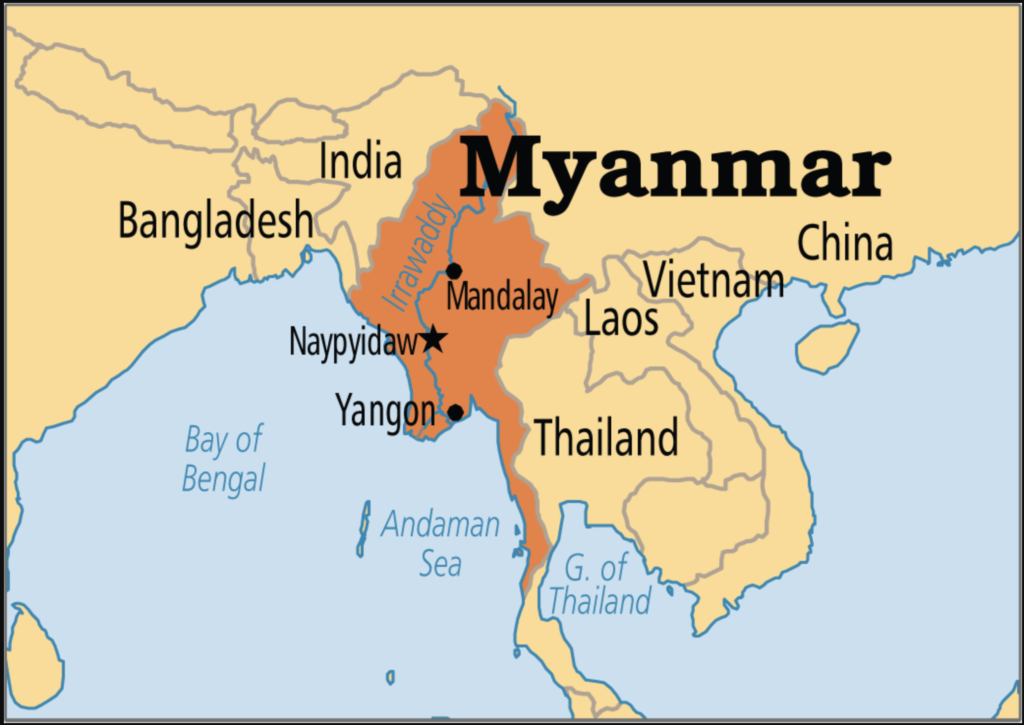
Context: At the invitation of Prime Minister Narendra Modi, the President of Myanmar, U Min Aung Hlaing, paid his first official visit to India (May 30 – June 3, 2026). The visit concluded with a comprehensive Joint Statement aimed at charting the way forward for bilateral, regional, and global cooperation.
Key Highlights of the Joint Statement
1. Strategic & Geopolitical Convergence
- Policy Confluence: The Indian Prime Minister emphasized that Myanmar occupies a unique, pivotal position at the intersection of three major Indian foreign policy frameworks:
- Neighbourhood First Policy
- Act East Policy
- MAHASAGAR (Mutual and Holistic Advancement for Security and Growth Across Regions) vision for maritime security.
- Sovereignty: India formally reaffirmed its steadfast support for the sovereignty and territorial integrity of the Republic of the Union of Myanmar.
2. Security and Border Management
- Cross-Border Insurgency: Both nations underscored the critical importance of preventing the misuse of their sovereign territories for activities inimical to their mutual security interests.
- Myanmar reiterated its assurance that its territory would not be permitted to be used by militant groups acting against India’s security (a crucial commitment given the history of insurgent groups operating along the porous Indo-Myanmar border in the Northeast).
3. Economic Ties & Trade Integration
- Rupee-Kyat Trade Settlement: A major highlight was the mutual appreciation for the steady growth in trade transactions using the Rupee-Kyat settlement mechanism (operationalized in May 2024). This mechanism bypasses the US Dollar, conserving foreign exchange reserves and facilitating easier cross-border trade.
- Sectoral Focus: The India-Myanmar Business Conclave (jointly organized by CII and UMFCCI) identified agro-processing, petroleum, energy, and mining as key sectors for future joint investments.
4. Soft Power and Capacity Building
- Education: India announced a significant enhancement of the Mekong-Ganga Cooperation (MGC) ICCR scholarships for Myanmar students. The quota has been nearly tripled, from 36 to 100 scholarships annually, starting in 2026.
What are the Major Challenges in India-Myanmar Relations?
- Democracy vs. Security Dilemma: India faces a persistent diplomatic tightrope walk balancing its normative democratic values with hardcore realist national security interests.
- While Western nations maintain strict sanctions against the military regime, India’s immediate geographic proximity mandates uninterrupted engagement.
- Border Management and the FMR: The historical Free Movement Regime (FMR), which allowed tribal communities to travel 16 km across the border without a visa, has been suspended by India due to rising concerns over illegal immigration, narcotics trafficking, and insurgent infiltration.
- Local communities view the border as an artificial colonial construct that severs deep ancestral and ethnic kinships. Fencing without local consensus risks alienating Northeastern citizens.
- Infrastructural Bottlenecks: Strategic projects like the Kaladan corridor have suffered massive cost overruns and chronological delays.
- The rugged terrain, coupled with the dominance of Ethnic Armed Organizations (EAOs) like the Arakan Army in the Rakhine and Chin states, makes project execution highly volatile.
- Refugee Spillover: The intense internal conflict following the 2021 coup has triggered a significant influx of refugees into bordering Indian states (primarily Mizoram and Manipur), placing severe strain on local administration and exacerbating demographic fault lines.
- Reputational Damage: The revelation that India supplied USD 51 million in arms to the Myanmar junta since the February 2021 coup underscores a severe strategic conundrum.
- As the world’s largest democracy, supplying weapons to a regime accused of severe human rights violations attracts severe international criticism.
- The UN explicitly labeling these transactions as enabling a “death trade” damages India’s global diplomatic standing.
What Measures can Strengthen India-Myanmar Relations?
- De-risking Connectivity Investments: India must adopt adaptive, multi-layered security measures for its infrastructural assets. This may require nuanced, back-channel engagements with a broader spectrum of local stakeholders to ensure the physical security of projects like the Kaladan transit corridor.
- Smart Border Management: Expediting the deployment of the Comprehensive Integrated Border Management System (CIBMS) and strengthening the capacity of the Assam Rifles to curb transnational organized crime while maintaining humanitarian sensitivities.
- Institutionalized Security Architecture: Upgrading the NSA-level discussions into a permanent, structured security framework to ensure real-time, actionable intelligence sharing regarding insurgent movements.
- Leveraging Soft Power: Expanding deep-rooted cultural and historical diplomacy as evidenced by the President’s visit to the Mahabodhi Temple in Bodh Gaya coupled with targeted developmental assistance in health, education, and digital infrastructure.
Significance for UPSC Aspirants
- Gateway to ASEAN: Myanmar is the only ASEAN country that shares a land border with India (over 1,600 km across Arunachal Pradesh, Nagaland, Manipur, and Mizoram). Stable relations are a prerequisite for the success of India’s Act East Policy.
- Internal Security: Cooperation with the Myanmar military (Tatmadaw) is essential for cracking down on Indian Insurgent Groups (IIGs) that take sanctuary across the border.
- De-dollarization Efforts: The success of the Rupee-Kyat settlement mechanism is a practical case study of India’s broader macroeconomic push to internationalize the Rupee and de-risk its trade from global currency volatility.
- Countering China: With China heavily investing in the China-Myanmar Economic Corridor (CMEC), India’s proactive diplomatic, economic, and developmental engagement is vital to balancing Beijing’s strategic footprint in the Bay of Bengal region.
Science & Technology: Smallest Droplet of Quark-Gluon Plasma Discovered at LHC
Context: Researchers at the Large Hadron Collider (LHC) at CERN have made a groundbreaking discovery by creating the smallest known droplet of Quark-Gluon Plasma (QGP). By colliding oxygen nuclei, scientists observed that this microscopic system still exhibits fluid-like behavior, challenging our fundamental understanding of how matter behaves at the smallest scales.
What is Quark-Gluon Plasma (QGP)?
Under normal conditions, quarks (the fundamental building blocks of matter) are tightly bound together by particles called gluons to form protons and neutrons. This confinement is governed by the Strong Nuclear Force.
- The “Primordial Soup”: QGP is an extreme state of matter where protons and neutrons “melt” away, leaving a dense, freely interacting soup of unconfined quarks and gluons.
- Early Universe Conditions: Scientists believe the entire universe existed in this exact state for a few millionths of a second immediately after the Big Bang.
- Extreme Heat: It is one of the hottest substances ever created by humanity, reaching temperatures of trillions of degrees Celsius (about 100,000 times hotter than the core of the Sun).
The Breakthrough: Why Oxygen Collisions?
Historically, scientists created QGP by smashing heavy ions—like Lead (208 nucleons) or Gold—together at near light-speed. The resulting fireballs were large enough to definitively show QGP formation. On the other extreme, colliding light single protons did not reliably produce this plasma.
- Finding the Tipping Point: To find the exact threshold where independent subatomic particles transition into a collective fluid, researchers used Oxygen nuclei (16 nucleons).
- The Result: Oxygen serves as the perfect “middle ground.” The experiment proved that QGP formation is not limited to massive heavy nuclei; even relatively light, small atomic collisions can generate a droplet of this primordial plasma.
Key Phenomena Observed
1. The “Fluidity Paradox”
Despite consisting of only a few thousand subatomic particles (compared to the quadrillions of molecules found in a drop of water), the QGP droplet does not behave like a chaotic gas. Instead, it behaves like a near-perfect fluid with remarkably low viscosity, flowing and shifting collectively under pressure gradients.
2. Jet Quenching (Evidence of Fluidity)
The primary evidence that scientists had created a dense fluid droplet came through a phenomenon called Jet Quenching.
- When a high-energy collision occurs, it shoots out energetic sprays of particles (jets).
- If these particles travel through a vacuum or a gas, they retain their energy. However, scientists observed that particles moving through the oxygen-collision zone lost a significant amount of energy.
- This energy drag—similar to how a bullet drastically slows down when fired into water—proves that the particles were wading through a dense, fluid-like medium (the QGP).
Significance for UPSC Aspirants
- Understanding the Early Universe: This discovery provides critical experimental data on how the universe transitioned from a superhot, uniform fluid into the structured matter (atoms, stars, galaxies) we see today.
- Standard Model of Particle Physics: It tests the limits of Quantum Chromodynamics (QCD), the theory describing the strong nuclear force.
- The Large Hadron Collider (LHC): Located underground at the Swiss-French border, the LHC is the world’s largest particle accelerator. India is heavily involved with CERN; under a 1996 DAE-CERN protocol, India contributes hardware, software, and skilled manpower to the LHC project.
Art & Culture / Economy: Mission “Senehjori” to Transform Assam’s Muga Silk Sector
Context: The Union Minister for Development of North Eastern Region (MDoNER) and the Chief Minister of Assam recently launched Mission “Senehjori” – Assam Muga Silk USP. This comprehensive cluster-based initiative aims to transform Assam’s traditional Muga silk sector into a globally competitive luxury textile ecosystem.
What is Muga Silk?
Muga silk is a highly prized natural fiber deeply intertwined with Assam’s cultural heritage and economy.
- Golden Appearance: It is the world’s only naturally golden silk, known for its glossy, yellowish-gold tint and exceptional durability.
- Biological Origin: It is produced by the endemic silkworm species Antheraea assamensis.
- Host Plants: The silkworms primarily feed on the aromatic leaves of the Som and Soalu trees.
- Unique Identity: It holds the distinction of being India’s first GI-tagged silk (Geographical Indication), emphasizing its exclusive origin in Assam.
Key Highlights of Mission Senehjori
1. About the Mission
- Collaborative Effort: Launched by the Ministry of Development of Northeastern Region (MDoNER) in convergence with the Government of Assam, the Central Silk Board, and other stakeholders.
- Cluster-Based Approach: Implementation will focus on key Muga-producing districts in Assam, including Jorhat, Sivasagar, Lakhimpur, Dhemaji, Dibrugarh, Tinsukia, Majuli, and Sualkuchi.
- Core Objective: To develop a premium, traceable, and export-oriented luxury silk ecosystem capable of competing in international markets, while simultaneously strengthening Assam’s cultural economy.
2. Financial Outlay & Livelihood Impact
- Investment: Backed by an estimated investment of ₹396-411 crore over three years (including ₹136-151 crore from MDoNER).
- Beneficiaries: The mission will support nearly 2.6 lakh rearer and weaver families, aiming to substantially enhance their incomes and monetize the sector from “farm gate to foreign shore.”
3. Value Chain & Institutional Support
- Holistic Intervention: The project will strengthen the entire value chain—from host-plant cultivation and silkworm seed production to reeling, weaving, branding, and export promotion.
- Institution Building: It promotes the creation of Farmer Producer Organisations (FPOs) and Common Facility Centres (CFCs) to improve market linkages.
- Unified Branding: Global market access will be expanded under the unified “Senehjori” brand identity, backed by GI authentication.
Targets by 2028
The mission has set clear, quantifiable objectives to be achieved over a three-year period:
- Establish five modernized Muga reeling units and one dedicated Muga Spun Mill.
- Create 30 FPOs and over 1,180 Farmer Interest Groups.
- Regenerate 5,000 hectares of Som and Soalu host plant plantations.
- Ensure GI-authentication for over 80% of traded Muga silk, backed by a robust digital traceability system.
Promoting Silk Tourism
Beyond textile production, Mission Senehjori recognizes the cultural value of the “golden thread.” The initiative plans to develop a Muga Silk Trail, establish a Silk Tourism Park, and host annual Muga Utsav festivals to promote Assam’s silk heritage and boost experiential tourism.
Polity & Governance: MHA Amends Immigration and Foreigners Rules, 2025
Context: The Ministry of Home Affairs (MHA) has officially notified crucial amendments to the Immigration and Foreigners Rules, 2025. These changes aim to tighten the registration timelines for foreign nationals seeking stay extensions, revise citizenship regulations for minors of mixed parentage, and enhance internal security tracking.
Key Highlights of the Amendments
1. Revised Registration Timelines for Stay Extensions
- Visas of 180 Days or Less: Foreigners arriving in India on short-term visas who intend to extend their stay must now register “any time before the expiry of the 180-day period.” This replaces the previous, more lenient window that allowed registration within 14 days after the expiry of 180 days.
- Multi-Entry Visas: For foreigners holding visas valid for more than 180 days (but carrying a condition that continuous stay during each visit should not exceed 180 days), registration before the 180-day limit is now mandatory if they wish to prolong their current stay. Notably, permission for such extensions will now be granted only under emergent circumstances.
2. Regulations for Newborns of Mixed Parentage
- Relief from Mandatory Intimation: Previously, a mandatory 30-day electronic intimation rule applied upon the birth of a child to foreign nationals. The amendment provides relief: this rule will no longer apply if one of the parents is an Indian citizen and the parents wish to retain the child’s Indian citizenship.
- Delayed Foreign Citizenship Clause: If a child of mixed parentage acquires foreign citizenship at a later stage while still residing in India, the parents are legally obligated to inform the registration officer within 30 days of the child acquiring such foreign citizenship.
3. Institutional Compliance
- Medical Facilities: The notification updates and tightens the administrative reporting requirements and compliance procedures for all hospitals, nursing homes, and medical facilities that provide lodging or medical services to foreign nationals.
Broader Context and Significance
These regulatory updates are part of a broader, systemic push by the MHA to strengthen internal security tracking metrics and streamline immigration records.
The changes are aligned with recent parallel initiatives, including:
- Draft amendments to the Citizenship Rules, 2009, which require specific declarations regarding passports from neighboring countries (Pakistan, Afghanistan, and Bangladesh).
- The Citizenship (Amendment) Rules, 2026, which introduced electronic Overseas Citizen of India (e-OCI) cards for better digital tracking and convenience.
UPSC Relevance: This topic is highly relevant for GS Paper II (Polity and Governance – Citizenship, Government Policies and Interventions) and GS Paper III (Internal Security – Border Management and Immigration).