1. BRICS 2026 Summit & The “New Delhi Declaration”
Syllabus: GS-II (International Relations: Bilateral, regional and global groupings and agreements involving India and/or affecting India’s interests).
Context: India successfully hosted the 18th BRICS Summit (September 12–13, 2026) at Bharat Mandapam, concluding with the unanimous adoption of the “New Delhi Declaration.”
Key Highlights & Analysis:
- Theme: “Building for Resilience, Innovation, Cooperation and Sustainability.”
- Strategic Stance on Critical Tech: PM Modi explicitly cautioned against the “weaponisation of technology and critical minerals,” highlighting a major concern for developing nations regarding tech-monopolies and resource nationalism.
- New Institutional Frameworks Launched: India announced the establishment of the BRICS Integrated Early Warning System (EWS) for infectious diseases, a BRICS Logistics Supply Chain Cooperation framework, and a BRICS Incubator Network/Startup Innovation Fund for MSMEs.
- Mains Perspective: The New Delhi Declaration maps a consensus on global institutional reform, counter-terrorism, and AI governance, signaling BRICS’ evolution from an economic bloc to a definitive counterweight shaping the multipolar geopolitical order.
2. PM Vishwakarma Scheme Completes Three Years
Syllabus: GS-II (Government Policies and Interventions); GS-III (Inclusive Growth, MSMEs).
Context: Launched on Vishwakarma Jayanti in 2023, the scheme celebrated its 3rd anniversary on September 17, 2026, achieving its five-year registration target of 30 lakh artisans within three years.
Key Highlights & Analysis:
- Financial & Structural Impact: Out of a ₹13,000 crore outlay (FY24-FY28), the scheme has already sanctioned over 6.19 lakh enterprise development loans worth ~₹5,316 crore at a concessional 5% interest rate.
- Integration with Formal Economy: Beneficiaries are integrated into the Udyam Assist Platform, unlocking priority sector lending. Furthermore, over 8.11 lakh artisans have received digital incentives to promote cashless transactions.
- Impact Assessment: A concurrent evaluation by IIM Mumbai reported that 93% of trained artisans experienced a moderate to significant increase in income, directly translating skill upgrades into tangible economic benefits.
3. Invocation of 1991 India-Pakistan Advance Notice Agreement
Syllabus: GS-II (India and its Neighborhood – Relations).
Context: Following a collision between the Pakistan Naval Ship Hunain and an Indian Navy warship in the international waters of the North Arabian Sea, India formally invoked Article 10 of the 1991 India-Pakistan Advance Notice Agreement.
Key Highlights & Analysis:
- The 1991 Agreement Framework: Designed as a Confidence Building Measure (CBM), it mandates specific notice periods for military exercises to prevent accidental escalations: 15 days for air exercises, 30 days for major naval exercises, and 60-90 days for army-level movements.
- Significance: The invocation of Article 10 amidst a maritime incident underscores the fragility of the maritime security architecture in the Arabian Sea and the critical necessity of adhering to bilateral communication protocols to de-escalate kinetic naval stand-offs.
4. Second Edition of the India Electric Mobility Index (IEMI)
Syllabus: GS-III (Infrastructure, Environment, and Conservation).
Context: The newly released second edition of the IEMI reveals a massive surge in India’s EV adoption, with EV sales constituting 8.25% of all vehicle sales in 2025-26, up from a mere 0.5% in 2018.
Key Highlights & Analysis:
- Assessment Metrics: The index evaluates States/UTs based on Transport Electrification Progress (50% weightage), Charging Infrastructure Readiness (30%), and EV Research/Innovation Status (20%).
- Top Performers: Delhi tops the index (score: 84), followed by Maharashtra (78) and Karnataka (73). 29 out of 36 States/UTs now have notified EV policies.
- Infrastructure Boom: Public charging stations have seen exponential growth, expanding from 5,151 in late 2022 to over 29,000 by mid-2025, solving a critical bottleneck in the EV transition.
5. 16th Round of Commercial Coal Mine Auctions & Production Milestone
Syllabus: GS-III (Energy Security, Infrastructure).
Context: The Ministry of Coal launched the 16th round of commercial coal mine auctions on September 17, 2026, offering 25 coal blocks across nine states.
Key Highlights & Analysis:
- Production Record: India’s domestic coal production has crossed the critical 1 billion tonne mark for the second consecutive year, significantly buffering the nation’s energy security amid global supply chain volatility.
- Agreements Executed: Coal Mine Development and Production Agreements (CMDPAs) were executed for six previously auctioned mines (including Tara, Margo West/East).
- Economic Impact: To date, 147 coal mines have been successfully auctioned, projecting a capital investment of ₹55,000 crore. This commercialization drive is vital for reducing import dependency while simultaneously funding just-transition initiatives in coal-bearing states.
6. Draft National Data Centre Policy & Digital Infrastructure
Syllabus: GS-III (Science and Technology, Cyber Security).
Context: Highlighting data centres as the engine of India’s digital economy, recent strategic reviews emphasize the heavy regional concentration of digital infrastructure and the need for a comprehensive national policy.
Key Highlights & Analysis:
- Asymmetric Distribution: Currently, Mumbai accounts for 52% of the national data-centre capacity, followed by Chennai and Delhi NCR, creating vulnerabilities regarding disaster recovery and grid load.
- Draft Policy Provisions: The policy proposes the creation of Data Centre Economic Zones (DCEZs) with simplified single-window clearances and guaranteed high-quality power supply.
- Fiscal Incentives: Aligning with the Union Budget 2026-27, a tax holiday until 2047 is being extended for eligible foreign cloud providers utilizing domestic infrastructure, incentivizing hyper-scalers to localize data.
7. VIMARSH 2026 & SAMAR 2.0: Deepening Defence Indigenisation
Syllabus: GS-III (Indigenization of Technology, Security Challenges).
Context: The Ministry of Defence unveiled policy interventions at ‘VIMARSH 2026’ to dismantle technical and financial barriers for MSMEs and deep-tech startups entering the defense sector.
Key Highlights & Analysis:
- SAMAR 2.0 Launch: DRDO signed a contract with the Quality Council of India (QCI) for the System for Advance Manufacturing Assessment and Rating (SAMAR) version 2.0. This framework sets rigorous, standardized metrics to assess the manufacturing maturity of domestic defense enterprises.
- Grassroots Integration: Strategic MoUs were executed between the Society of Indian Defence Manufacturers (SIDM) and Laghu Udyog Bharati (LUB) to onboard grassroots MSMEs into the defense supply chain, advancing the core objectives of Atmanirbhar Bharat in defense procurement.
8. Delhi Declaration on Drylands (3D)
Syllabus: GS-III (Agriculture, Environment).
Context: The three-day Dryland Congress 2026 concluded in New Delhi with the adoption of the ‘Delhi Declaration on Drylands (3D)’.
Key Highlights & Analysis:
- The Declaration: It mandates stronger South–South and triangular cooperation to innovate and deploy sustainable agricultural solutions across the world’s increasingly vulnerable dryland ecosystems.
- Strategic Partnerships: Key MoUs were signed by the Global Crop Diversity Trust and ICRISAT with various institutes, including NIFTEM and Wipro, to fuse corporate R&D with agricultural science to breed climate-resilient crop varieties.
9. “Pension Sakhis” for Rural Social Security
Syllabus: GS-II (Social Empowerment, Welfare Schemes for Vulnerable Sections).
Context: The Department of Rural Development (DoRD) and the Pension Fund Regulatory and Development Authority (PFRDA) signed an MoU to launch the ‘Pension Sakhi’ network.
Key Highlights & Analysis:
- Convergence Strategy: The initiative leverages the vast, women-led Deendayal Antyodaya Yojana–National Rural Livelihoods Mission (DAY-NRLM) network, particularly Banking Correspondent (BC) Sakhis.
- Target: It aims to expand pension awareness, financial literacy, and grassroots enrollment among SHG members, rural women, and “Lakhpati Didis” in remote geographies, addressing the severe deficit in old-age income security among the unorganized rural workforce.
10. Task Force for Revival of Formula 1 in India
Syllabus: GS-III (Economy – Sports Infrastructure and Soft Power).
Context: The Ministry of Youth Affairs and Sports constituted a 10-member Task Force, headed by NITI Aayog’s Programme Director Yugal Kishore Joshi, to explore hosting a Formula 1 Grand Prix by 2028.
Key Highlights & Analysis:
- Economic Rationale: Beyond sports, hosting global motorsport events drives immense foreign direct investment, upgrades urban logistical infrastructure, boosts high-end tourism, and projects systemic national soft power. The task force will assess the structural roadmap required for the sustainable growth of the domestic motorsports industry.
PRELIMS FACT FILE – 17 SEPTEMBER 2026
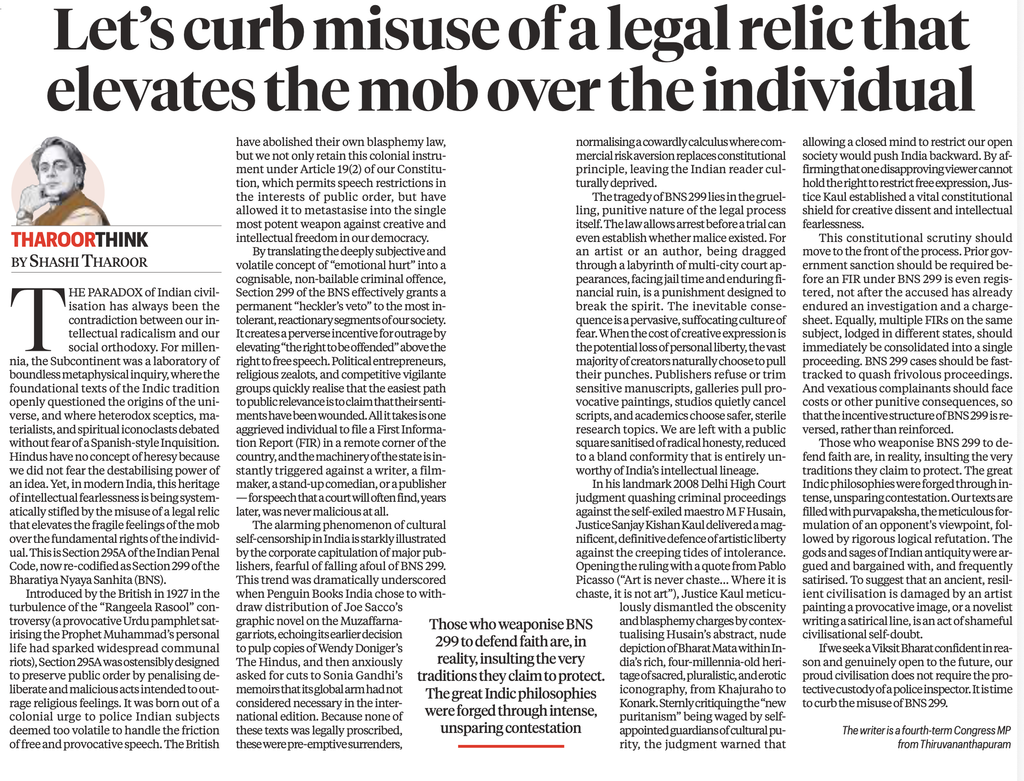
- Census Towns (Criteria): To be classified as a Census Town, an area must have: (1) A minimum population of 5,000, (2) At least 75% of the male working population engaged in non-agricultural pursuits, and (3) A population density of at least 400 persons per sq. km.
- Indian Council of World Affairs (ICWA): India’s oldest foreign policy think tank (established 1943). It was declared an Institution of National Importance in 2001 and facilitates Track-II and Track-1.5 diplomacy.
- Space Weaponisation (Kinetic vs. Non-Kinetic): Kinetic weaponisation involves physically destroying space assets (e.g., India’s Mission Shakti ASAT test). Non-kinetic weaponisation involves disabling assets without physical destruction (e.g., electronic jamming, cyber-attacks on satellite communications).
- Mission Mausam: India’s 51st Doppler Weather Radar was inaugurated in Sambalpur, Odisha, under this mission, massively upgrading extreme weather event forecasting capabilities for the eastern seaboard.
- International Day of Democracy (Sept 15): Established by the UN General Assembly in 2007, the 2026 observance focused on the theme of “Deliberative democracy: bringing diverse voices into decision-making.”
- Central Board of Film Certification (CBFC): A statutory body regulating the public exhibition of films. Public screening is illegal in India unless certified by this body based on applicable legal provisions.