Welcome to a comprehensive and structured UPSC Current Affairs compilation for October 14 and 15, 2026, sourced from PIB, The Hindu, and The Indian Express.
1. PM GatiShakti National Master Plan Completes 5 Years
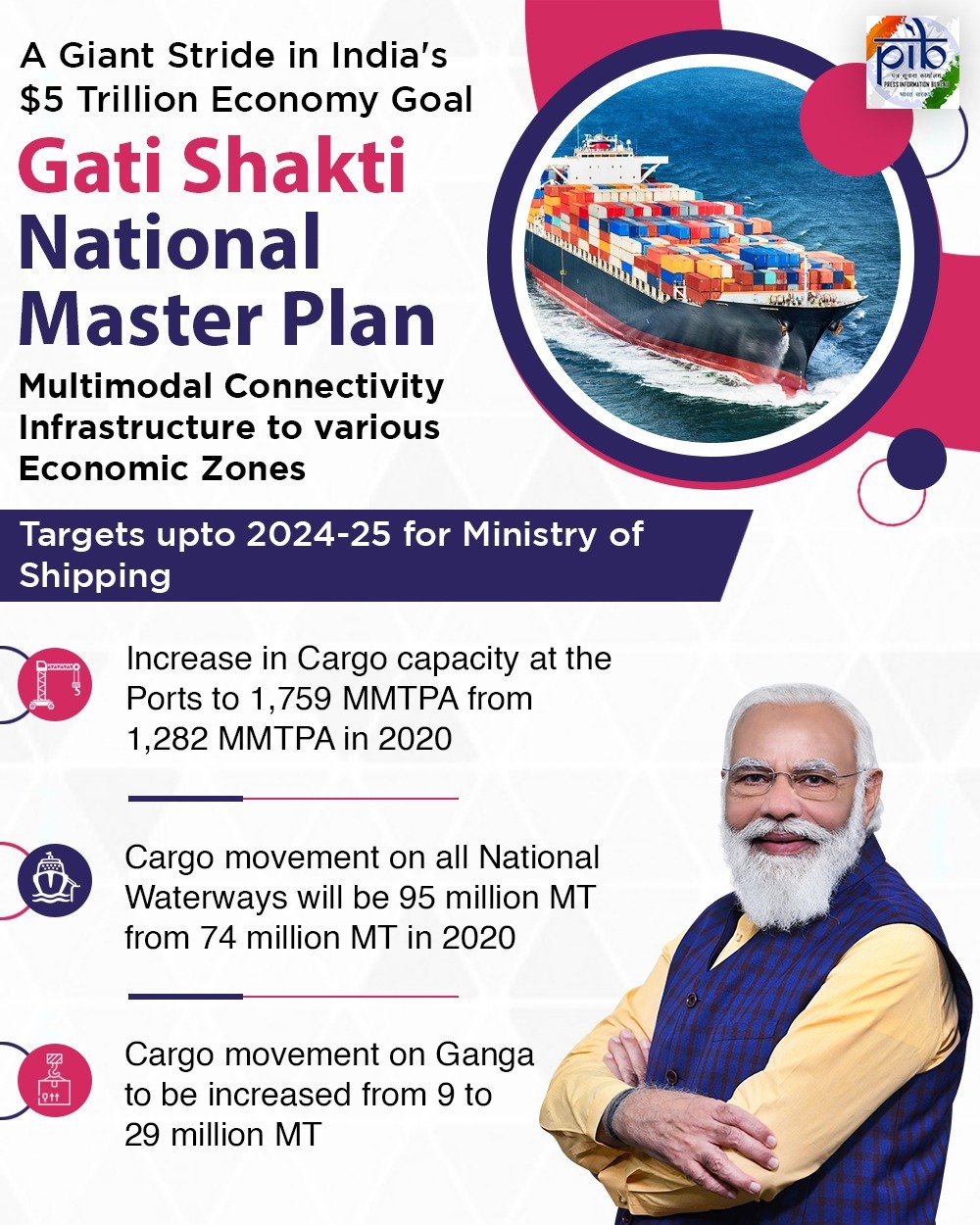
Context: The PM GatiShakti National Master Plan (NMP), launched in October 2021 to provide multimodal connectivity infrastructure to various economic zones, has successfully completed five years of implementation.
Key Details:
The PM GatiShakti initiative was introduced to break departmental silos and bring in holistic and integrated planning and execution of projects. Over the last five years, it has onboarded multiple ministries, integrating data layers from railways, roadways, shipping, and aviation onto a centralized Geographic Information System (GIS) platform. The initiative has streamlined logistics by mapping out economic zones (like pharmaceutical clusters, defense corridors, and textile parks) and aligning them with connectivity infrastructure.
Significance & UPSC Relevance (GS Paper 3):
Infrastructure is a key driver for the Indian economy. GatiShakti directly addresses India’s high logistics cost (which traditionally hovered around 13-14% of GDP) by aiming to bring it down to global standards (around 8%). This improves export competitiveness and boosts the ‘Make in India’ initiative. For UPSC, understanding its technology-backed approach (GIS mapping) and convergence model is crucial for questions on infrastructure, inclusive growth, and supply chain management.
2. First BIMSTEC Home Ministers’ Meeting Hosted by India
Context: India hosted the 1st Bay of Bengal Initiative for Multi-Sectoral Technical and Economic Cooperation (BIMSTEC) Home Ministers’ Meeting in New Delhi.
Key Details:
The landmark meeting marked a significant step toward regional security architecture among member nations (India, Bangladesh, Bhutan, Nepal, Sri Lanka, Myanmar, and Thailand). The ministers adopted several key frameworks:
- BIMSTEC Convention against Trafficking in Persons.
- BIMSTEC Plan of Action on Drug Control.
- MoU on Capacity Building to combat Money Laundering (ML) and Terror Financing (TF).
- Action Plans to curb illicit financial flows and enhance coordination against transnational crime.
Significance & UPSC Relevance (GS Paper 2):
With SAARC remaining largely dormant, BIMSTEC has emerged as the primary vehicle for India’s “Neighbourhood First” and “Act East” policies. The Bay of Bengal region faces porous borders, making it vulnerable to drug trafficking (proximity to the Golden Triangle) and human smuggling. This meeting solidifies India’s role as a net security provider in the region and institutionalizes security cooperation, a vital topic for international relations and internal security.
3. One Year of PM Dhan-Dhaanya Krishi Yojana (PMDDKY)
Context: The PM Dhan-Dhaanya Krishi Yojana has completed one year of its rollout. To mark the occasion, three districts in Gujarat received National Excellence Awards for successful implementation.
Key Details:
Launched with an annual financial outlay of ₹24,000 crore, PMDDKY’s primary objective is to transform agriculture and allied activities in 100 lagging “Aspirational Agricultural Districts.” The scheme operates on a data-driven, convergence-based model, ensuring that multiple existing agricultural, irrigation, and rural development schemes work in tandem rather than in isolation. It focuses heavily on precision agriculture, climate-resilient crop planning, and creating robust forward and backward market linkages for farmers.
Significance & UPSC Relevance (GS Paper 2 & 3):
The scheme borrows its framework from the successful Aspirational Districts Programme (ADP), applying competitive and cooperative federalism strictly to the agricultural sector. For mains, this serves as an excellent case study for government interventions in agriculture, doubling farmers’ income, and addressing regional disparities in agricultural productivity.
4. 2026 Nobel Prize in Economics: Advancing Macroeconomic Stabilisation
Context: The 2026 Sveriges Riksbank Prize in Economic Sciences (Nobel Prize in Economics) was awarded to US economists Robert E. Hall and Michael Woodford for their pioneering work on advancing macroeconomic stabilisation.
Key Details:
Their research has profoundly influenced how central banks globally conduct monetary policy, particularly in managing inflation and economic shocks. Michael Woodford’s work on “interest rate rules” and the forward guidance mechanism has provided modern central banks (including the RBI) with theoretical frameworks to manage market expectations without constantly altering interest rates. Robert Hall’s research on consumption dynamics and labor markets helped explain why economies often struggle to recover quickly from recessions.
Significance & UPSC Relevance (GS Paper 3):
Economic theories recognized by the Nobel committee frequently appear in UPSC Prelims and Mains (e.g., questions on behavioral economics or labor market frictions). Understanding their models on macroeconomic stabilization is directly relevant to chapters on Monetary Policy, Inflation Targeting, and the functioning of the Reserve Bank of India in mitigating economic shocks.
5. WWF’s Living Planet Report: 73% Decline in Wildlife Populations
Context: The World Wide Fund for Nature (WWF) released a highly concerning report indicating an average 73% decline in global wildlife population sizes between 1970 and 2022.
Key Details:
The Living Planet Index, which tracks populations of mammals, birds, fish, reptiles, and amphibians, highlighted that freshwater ecosystems have been hit the hardest, suffering disproportionate population collapses due to dam construction, pollution, and water extraction. Tropical regions, particularly Latin America and the Caribbean, recorded the steepest drops. The report cites habitat loss, overexploitation, climate change, and invasive species as the primary drivers of this catastrophic biodiversity loss.
Significance & UPSC Relevance (GS Paper 3):
Biodiversity conservation is a core theme in the UPSC syllabus. This data point is critical for Mains answers related to the Sixth Mass Extinction, the Kunming-Montreal Global Biodiversity Framework, and environmental degradation. It underscores the urgent need for sustainable development and stronger enforcement of wildlife protection laws globally.
6. India-China Trade Deficit Crosses $100 Billion Mark
Context: According to data released by China’s General Administration of Customs (GAC), India’s exports to China grew by 40% in the first three quarters of 2026 to $20 billion, but the bilateral trade deficit continued to widen, crossing $100 billion this year.
Key Details:
Despite a healthy surge in Indian exports—driven primarily by raw materials, agricultural products, and certain refined chemicals—the volume of imports from China continues to dwarf outgoing trade. India remains heavily reliant on China for capital goods, active pharmaceutical ingredients (APIs), electronics, and machinery. This structural imbalance highlights that while Indian export volumes are growing, the value chains are still dominated by Chinese high-tech and manufactured goods.
Significance & UPSC Relevance (GS Paper 2 & 3):
The widening trade deficit with a strategic rival poses significant economic and security concerns. For UPSC, this highlights the necessity and the challenges of the Atmanirbhar Bharat initiative and the Production Linked Incentive (PLI) schemes. It acts as a critical evaluation point for India’s manufacturing competitiveness and supply-chain vulnerabilities.
7. Upgradation of ITIs under PM-SETU Scheme
Context: The Ministry of Skill Development and Entrepreneurship (MSDE) signed a sharing agreement for the upgradation of 9 Industrial Training Institute (ITI) clusters in Andhra Pradesh and Gujarat under the PM-SETU Scheme.
Key Details:
The Pradhan Mantri Skilling and Employability Transformation through Upgraded ITIs (PM-SETU) scheme aims to modernize vocational training infrastructure. The agreement greenlights an approved investment of approximately ₹440 crore to upgrade facilities in Surat (Gujarat) and Visakhapatnam (AP). The upgradation will integrate new-age courses aligned with Industry 4.0, such as IoT, robotics, drone manufacturing, and advanced manufacturing, moving away from outdated legacy trades.
Significance & UPSC Relevance (GS Paper 2 & 3):
Reaping India’s demographic dividend hinges entirely on employability. Traditional ITIs suffer from outdated curricula and poor industry linkage. PM-SETU aligns with the National Education Policy (NEP) 2020 by integrating vocational education with mainstream schooling and local industry demands. This is a crucial policy point for essays and answers on employment, skill development, and human capital.
8. IMF Raises India’s GDP Growth Forecast
Context: The International Monetary Fund (IMF), in its World Economic Outlook (WEO) October 2026 update, has raised India’s GDP growth forecast to 7.8% for FY26 and 7% for FY27.
Key Details:
The IMF attributed this upward revision to stronger-than-expected domestic demand, a robust surge in services sector activity, and increased capital expenditure by the government. Remarkably, this growth comes despite ongoing Middle East crises and elevated global oil prices. The IMF report maintains that India will remain the world’s fastest-growing major economy. Furthermore, the report projected India’s retail inflation at a manageable 5% in FY27, easing to 4.4% in FY28.
Significance & UPSC Relevance (GS Paper 3):
Macroeconomic indicators from reputed international organizations are standard Prelims fare. For Mains, this underscores India’s economic resilience in a fractured global geopolitical environment. It provides evidence for the success of domestic macroeconomic management, inflation targeting by the RBI, and the buffer created by robust foreign exchange reserves.
9. 3rd International Bharat 6G Symposium
Context: Union Minister Jyotiraditya Scindia inaugurated the 3rd International Bharat 6G Symposium 2026 in New Delhi, outlining India’s vision to be a frontrunner in next-generation telecommunications.
Key Details:
While the world is still scaling 5G, India has proactively launched the Bharat 6G Vision to ensure the country contributes actively to the standard-setting, intellectual property creation, and technological foundational development of 6G. The symposium brought together academia, industry leaders, and global telecom bodies to foster R&D in terahertz spectrum utilities, AI-driven networks, and ubiquitous connectivity.
Significance & UPSC Relevance (GS Paper 3):
Historically, India has been a consumer of 2G, 3G, and 4G technologies developed in the West or China. The Bharat 6G vision marks a paradigm shift from being a technology consumer to a technology creator. This topic is vital for Science and Technology questions regarding indigenous technological development, digital sovereignty, and the economic multiplier effects of telecommunications.
10. India-UK Bilateral Maritime Exercise ‘KONKAN-26’
Context: The Indian Navy and the UK Royal Navy commenced their bilateral maritime exercise ‘KONKAN-26’ off the coast of the United Kingdom.
Key Details:
Exercise KONKAN is a cornerstone of the strategic partnership between India and the UK. The 2026 iteration includes advanced operational drills across air, surface, and sub-surface domains. Key activities in the sea phase comprise flying operations with cross-deck landings, air-defense exercises, complex seamanship evolutions, and anti-submarine warfare (ASW) exercises.
Significance & UPSC Relevance (GS Paper 2 & 3):
Defense exercises are a staple in UPSC Prelims. For Mains, KONKAN-26 illustrates India’s growing naval interoperability with Western powers. It reflects India’s broader strategic objective of ensuring a free, open, and rules-based maritime order, particularly in the Indo-Pacific, while also balancing its defense partnerships beyond traditional allies like Russia.
📌 Quick Prelims Facts
- Ambaji Mohanthal Gets GI Tag:Gujarat’s traditional sweet prasad, ‘Ambaji Mohanthal’ (offered at the Ambaji temple), has officially received a Geographical Indication (GI) tag.
- INS Mangrol Commissioned:The Indian Navy commissioned ‘INS Mangrol’, the 3rd Mahe-class Anti-Submarine Warfare Shallow Water Craft (ASW-SWC) at Mumbai.
- Boeing Sukanya Programme: Aims to increase women’s participation in India’s aviation sector through STEM labs. Recently expanded by the Odisha Governor.
- Important Days Observed:
- October 11: International Day of the Girl Child.
- October 12: World Arthritis Day.
- Putul Sonowal:Secured India’s first-ever medal at the World Bowls Champion of Champions 2026.
- ULLAS Scheme Milestone:Aligning with NEP 2020, Mizoram was officially declared India’s first fully literate state under the ULLAS scheme (Understanding of Lifelong Learning for All in Society).