India Showcases Digital Reforms and Social Protection Expansion at 114th ILC
Why in News?
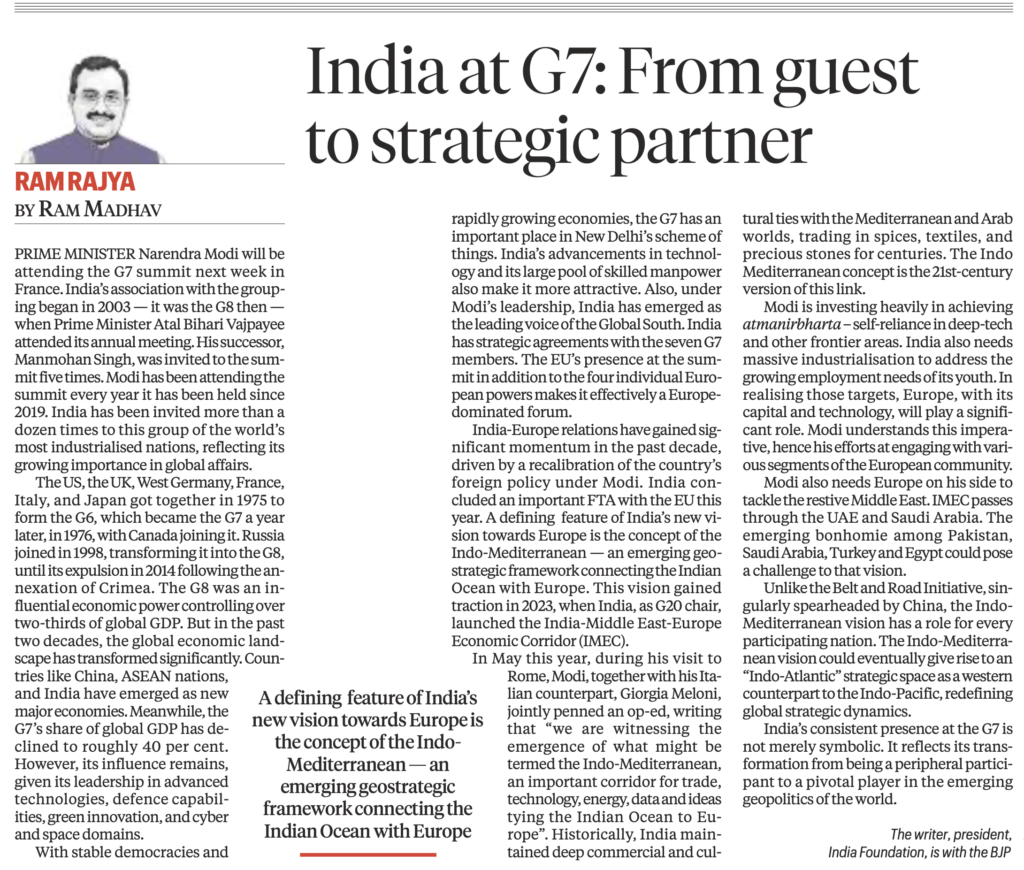
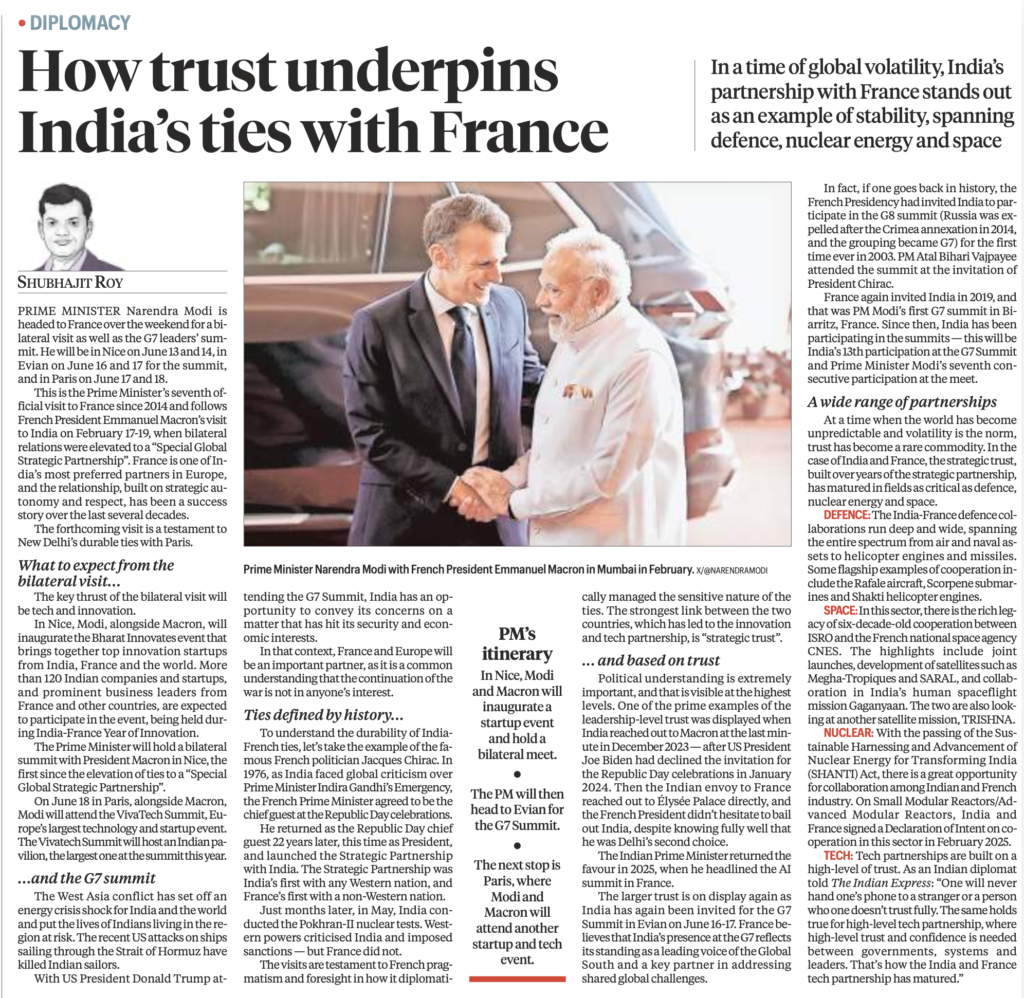
The Union Minister of State for Labour and Employment led the Indian delegation at the 114th International Labour Conference (ILC) in Geneva, Switzerland. India utilized the global platform to showcase its structural labor reforms, expanding social security architecture, and scalable Digital Public Infrastructure (DPI).
Key Highlights of India’s Address
- Consolidation of Labor Laws: India highlighted the formalization of its labor market by guiding the consolidation of 29 archaic Central labor laws into four streamlined, modern Labour Codes. The integration adheres to the principle of “Antyodaya” (uplifting the weakest sections) to simplify regulatory compliance while reinforcing worker welfare.
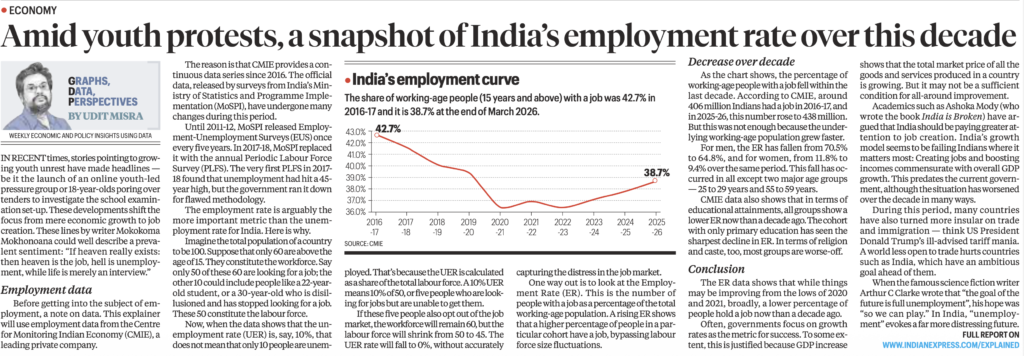
- Surge in Employment Metrics: The delegation presented robust national employment data showing that youth employability rose from 34% in 2014 to over 56% in 2025. Concurrently, the national unemployment rate dropped from 6% in 2017 to 3.1% in 2025, while female labor force participation surged from 22% to 38.8%.
- Massive Social Security Expansion: India apprised the International Labour Organization (ILO) that its domestic social protection coverage expanded from 19% in 2015 to 64.3% in 2025, now encompassing approximately 1 billion (1,001 million) citizens.
- DPI as Diplomatic Soft Power: Platforms like the e-Shram Portal and the National Career Service (NCS) were positioned as scalable Digital Public Goods. During bilateral sidelines, India extended formal technical assistance to nations like Rwanda and Sri Lanka to help build similar digital platforms for workforce planning and formalization.
- Global Mobility & New Schemes: India detailed its ongoing feasibility study with the ILO to establish an international reference classification of occupations to link domestic skilling with global markets. The launch of the Pradhan Mantri Viksit Bharat Rozgar Yojana was also highlighted to showcase accelerated job creation.
Institutional Framework: The International Labour Conference (ILC)
The ILC acts as the supreme decision-making and deliberative organ of the ILO, a specialized agency of the United Nations. Dubbed the “international parliament of labour,” it meets annually every June in Geneva to formulate international labor standards.
It is uniquely characterized by its tripartite structure: each member state sends two government delegates, one employer delegate, and one worker delegate. All delegates hold independent voting rights, allowing industry and labor representatives to vote distinctly from their home governments.
The Four Enacted Labour Codes
- Code on Wages, 2019: Universalizes statutory minimum wages and ensures timely wage payments across both the organized and unorganized sectors.
- Industrial Relations Code, 2020: Streamlines industrial dispute resolutions, modifies trade union recognition rules, and updates thresholds for layoffs, retrenchments, and factory closures.
- Code on Social Security, 2020: Expands the mandates of the ESIC and EPFO. It represents India’s first legal framework to theoretically include gig and platform workers under social security nets.
- Occupational Safety, Health and Working Conditions (OSH) Code, 2020: Establishes workplace health and safety norms, with explicit provisions safeguarding inter-state migrant workers and contract laborers.
Structural Weaknesses and Workforce Vulnerabilities
Despite legislative consolidation, analysts highlight significant operational and legal gaps that leave large segments of the workforce unprotected:
- The Gig Worker Legal Vacuum: While the Code on Social Security acknowledges gig and platform workers, it stops short of classifying them as standard “employees.” Absent a formal employer-employee relationship, they are completely excluded from the protections of the Industrial Relations and OSH Codes, depriving them of legal minimum wage guarantees or collective bargaining rights.
- Algorithmic Tyranny: Delivery and logistics workforces operate under automated parameters. Opaque dark-store allocation algorithms, absolute performance metrics, and automated ratings dictate daily earnings without human dispute-resolution recourses. Furthermore, aggregators frequently implement unilateral cuts to piece-rate base payouts.
- Higher ‘Hire and Fire’ Flexibility: The Industrial Relations Code raised the employee threshold from 100 to 300 workers before an establishment must seek prior government permission for retrenchment, lay-offs, or closure. This grants extreme flexibility to MSMEs but dilutes job security for millions.
- Exploitation of Shift Timing: While the OSH Code enforces a standard 48-hour workweek, ambiguities surrounding daily shift limits, spread-over caps, and rest intervals allow employers to enforce exhausting 12-hour shifts under the guise of compressed 4-day workweeks, frequently evading overtime premiums.
- Diluted Collective Bargaining & Strikes: Trade unions now require a steep 51% worker support on the muster roll to be recognized as a sole negotiating agent, severely impacting unorganized unionization. The code also mandates a strict 60-day notice period prior to strikes and entirely bans strikes during active conciliation.
- Exclusionary OSH Limits: The OSH Code applies predominantly to establishments with 10 or more workers, automatically absolving the vast majority of India’s micro-enterprises and informal units from safety inspections.
- Last-Mile welfare Lag & Wage Stagnation: While the e-Shram portal has registered millions of unorganized workers, converting this digital data into tangible benefits (pensions, healthcare) remains highly inconsistent across states. Concurrently, while states adjust the inflation-linked Variable Dearness Allowance (VDA) twice a year to counter the surging Consumer Price Index for Industrial Workers (CPI-IW), they have chronically delayed updating the fundamental base minimum wage, triggering severe real-wage erosion.
Recommended Interventions
To build a sustainable labor market, experts advocate for moving past the binary of “employee” vs. “contractor” by legally defining a ‘Dependent Contractor’ or ‘Platform Worker’ category to guarantee base pay, mirroring elements of the EU’s Platform Work Directive.
India should replicate the Rajasthan Platform-Based Gig Workers Act, 2023, which mandates a dedicated welfare board and a welfare cess on digital platform transactions. Operationally, the e-Shram database should be algorithmically integrated with the One Nation One Ration Card (ONORC) and Ayushman Bharat to instantly trigger targeted relief during macroeconomic shocks. Finally, reviving the domestic Indian Labour Conference (ILC) is essential to foster structured dialogues between the state, employers, and unorganized labor unions.
Extension and Limit Expansion Approved for CGSMFI-2.0
Why in News?
The Government of India approved a crucial extension of the Credit Guarantee Scheme for Microfinance Institutions-2.0 (CGSMFI-2.0) until August 31, 2026, or until total guarantee issuances touch ₹20,000 crore, whichever occurs earlier.
To boost credit flow, the maximum loan threshold for large NBFC-MFIs under the scheme has been drastically scaled up from ₹300 crore to ₹1,000 crore, subject to an overall cap of 20% of their Assets under Management (AUM).
Structural Architecture of CGSMFI-2.0
Launched in March 2026, CGSMFI-2.0 provides government-backed credit guarantee coverage to Member Lending Institutions (MLIs) for loans extended to Microfinance Institutions (MFIs) and Non-Banking Financial Companies (NBFC-MFIs). These institutions utilize the capital exclusively for incremental on-lending to small, underserved borrowers under the RBI’s microfinance definitions.
+-------------------------------------------------------------------------+
|                CGSMFI-2.0 Tiered Guarantee Matrix                      |
+-------------------------------------------------------------------------+
| Small MFIs (AUM < ₹500 cr)     : 80% Default Coverage | Max Loan: ₹100cr|
| Medium MFIs (AUM ₹500-2,000cr) : 75% Default Coverage | Max Loan: ₹200cr|
| Large MFIs (AUM ≥ ₹2,000 cr)   : 70% Default Coverage | Max Loan: ₹1,000|
+-------------------------------------------------------------------------+
| *Mandatory Credit Distribution: MLIs must route ≥5% of loans to small  |
|  MFIs and ≥10% to medium MFIs to ensure equitable capital flow.         |
+-------------------------------------------------------------------------+
The scheme executes an automatic approval framework handled via the National Credit Guarantee Trustee Company Ltd (NCGTC). Loans under this facility must be disbursed within three months, carrying a maximum tenure of three years, which includes a built-in one-year repayment moratorium.
Profile of Microfinance Institutions (MFIs)
MFIs are specialized financial intermediaries that extend small, collateral-free loans (microcredit) to low-income households, predominantly targeting rural and semi-urban women. By relying on community-based delivery vehicles like Joint Liability Groups (JLGs) and Self-Help Groups (SHGs), they leverage peer-pressure mechanisms to maintain repayment security without traditional physical assets.
In India’s regulatory matrix, NBFC-MFIs are supervised directly by the Reserve Bank of India (RBI), which dictates strict interest rate caps and prudential norms, while the National Bank for Agriculture and Rural Development (NABARD) manages refinancing support and monitors the foundational SHG-Bank Linkage Program.
Rehabilitation Census Notified for the Great Nicobar Project
Why in News?
The Andaman and Nicobar Islands administration formally notified the commencement of the Rehabilitation and Resettlement (R&R) census on Great Nicobar Island. This statistical baseline marks the formal initiation of the trunk infrastructure component of the mega-development plan.
Core Components and Strategic Value
The Great Nicobar Island Project is a massive infrastructure initiative budgeted at approximately ₹92,000 crore, with an extended execution roadmap reaching up to the year 2050. The immediate “trunk infrastructure” phase focuses on the layout of a strategic trunk road network and supporting utilities.
The master plan seeks to transform the island via a holistic greenfield township with a tourism-driven economy, an international container transshipment port, an airport, and dedicated naval defense infrastructure. Positioned as a premier model for “frontier infrastructure development,” the project secures India’s maritime presence in the Bay of Bengal and adjacent critical Sea Lanes of Communication (SLOCs) within the Indo-Pacific.
Environmental and Anthropological Friction
The project has drawn deep scrutiny from environmentalists and anthropologists due to its potential impact on the island’s fragile ecosystem and vulnerable indigenous tribes—specifically the Nicobarese and the Shompen—who maintain isolated, codependent relationships with the local biosphere.
While the Public Investment Board had previously flagged concerns regarding the container port’s long-term commercial objectives, the Ministry of Defence recently re-emphasized that the project is non-negotiable for national security and sovereign regional projection.
EAC-PM Recommends Demographic Metrics for Next Parliamentary Delimitation
Why in News?
The Economic Advisory Council to the Prime Minister (EAC-PM) released an influential working paper outlining recommendations for India’s impending delimitation of parliamentary constituencies.
Moving away from single-variable population metrics, the paper advises using a multi-factor compositional profile to guide a “targeted” splitting of seats while structurally preserving the current inter-state seat ratios for larger states.
Key Recommendations and Statistical Findings
The study evaluated election data spanning 2009–2024 to trace the statistical relationships between voter turnout, geographic constituency size, and five distinct “compositional features”:
- Urban share
- Scheduled Caste (SC) share
- Scheduled Tribe (ST) share
- Linguistic polarization
- Linguistic diversity
The EAC-PM strongly advises the Delimitation Commission against applying a uniform, size-only rule to split large constituencies. Instead, it argues that a seat’s demographic and linguistic architecture must dictate its boundary adjustments. Additionally, the paper states that the delimitation process should be strategically synchronized with a fresh polling booth rationalization cycle, the release of upcoming 2027 Census tabulations, and gender-disaggregated electoral data.
Legal and Constitutional Context of Delimitation
Delimitation involves redrawing the boundaries of Lok Sabha and State Assembly seats to ensure that each elected representative commands a roughly equal voter base, adhering to Article 82 (for Parliament) and Article 170 (for State Assemblies) following each decadal census. The Delimitation Commission is an independent, three-member statutory body comprising a Chairperson (a serving or retired Supreme Court Judge), the Chief Election Commissioner, and respective State Election Commissioners. Its final decrees hold the force of law, are presented to the legislatures without modification, and cannot be challenged in any court.
+--------------------------------------------------------------------------+
|                  The History of Delimitation Freezes                    |
+--------------------------------------------------------------------------+
| * Commissions Formed   : 1952, 1963, 1973, and 2002.                     |
| * 42nd Amendment (1976): Froze inter-state Lok Sabha seat allocation on   |
|                          the 1971 Census to protect states implementing  |
|                          population control (mostly Southern states)     |
|                          from losing political weight.                   |
| * 84th Amendment (2001): Extended this inter-state allocation freeze     |
|                          until the first census conducted after 2026.    |
+--------------------------------------------------------------------------+
| Current Status: While internal boundaries were adjusted in 2002 based    |
| on 2001 data, the macro-allocation of seats to states remains locked     |
| to 1971 demographic metrics.                                             |
+--------------------------------------------------------------------------+
Supreme Court Uses Article 142 to Quash POCSO Conviction Post-Marriage
Why in News?
The Supreme Court exercised its extraordinary constitutional jurisdiction under Article 142 to set aside the criminal conviction and prison sentence of a man convicted under the Protection of Children from Sexual Offences (POCSO) Act, 2012. The apex court took into account that the victim, upon attaining legal majority, had subsequently married the accused.
Extraordinary Powers Under Article 142
Article 142 of the Indian Constitution empowers the Supreme Court to pass unique decrees or orders necessary for doing “complete justice” in any cause or matter pending before it. These orders are enforceable throughout the territory of India and allow the apex judiciary to bypass statutory rigidities when strict adherence to written law would result in manifest injustice or human hardship.
Statues and Safeguards Under the POCSO Act
The POCSO Act, 2012 was enacted to fulfill India’s international commitments under the UN Convention on the Rights of the Child, ratified in 1992. Key statutory features include:
- Gender-Neutral Framework: It legally recognizes that both male and female minors (defined as individuals under 18 years) can be victims of sexual abuse, extending identical protections to all.
- Absolute Identity Confidentiality: Section 23 strictly prohibits the media or public documents from revealing any details (names, school locations, families) that could potentially compromise the child victim’s anonymity.
- Mandatory Reporting Clause: Sections 19 to 22 establish a statutory obligation, penalizing any individual or medical professional who fails to report suspected or known child sexual abuse to the Special Juvenile Police Unit or local police.
- Stringent Penalties: Enforces graded punishments. A major 2019 amendment introduced capital punishment (the death penalty) for specific categories of aggravated penetrative sexual assault against children.
Srishti Kiran Secures World No. 1 Spot in Global Under-13 Tennis
Why in News?
Srishti Kiran, a tennis player from Bengaluru, achieved a historic sporting milestone by securing the World No. 1 spot in the Under-13 category of the International Tennis Federation (ITF) Junior World Rankings.
Path to the Apex Ranking
Her rapid ascent to the top of the global standings was propelled by winning five consecutive ITF junior titles, complemented by a runner-up finish at the ITF World Tennis Tour Juniors J100 tournament held in Guatemala. She achieved an overall ITF junior ranking of No. 357—the highest globally for any under-13 player—despite competing in only eight ranking tournaments, which is fewer than the standard ten-tournament matrix typically used to compute rankings.
Structure of the International Tennis Federation (ITF)
Founded in 1913, the ITF is the world governing body for physical, wheelchair, and beach tennis. It regulates the sport, maintains standard rules, and administers premium international team events such as the Davis Cup (for men) and the Billie Jean King Cup (for women). The ITF World Tennis Tour serves as the vital institutional bridge and ranking pathway connecting the junior circuit with elite professional tours handled by the Association of Tennis Professionals (ATP) and the Women’s Tennis Association (WTA).
The Grand Slam Blueprint
The peak of professional tennis is governed by the four Grand Slam tournaments, overseen by the joint Grand Slam Board in coordination with the ITF.
| Grand Slam Tournament | Location | Court Surface Type | Iconic Characteristic |
| Australian Open | Melbourne | Hard Court | Opened the calendar year; highly modern facilities. |
| French Open | Paris | Clay Court | Known as Roland Garros; favors high-endurance baseline play. |
| Wimbledon | London | Grass Court | Founded in 1877 (oldest tournament); strictly enforces an all-white dress code. |
| US Open | New York City | Hard Court | Known for its intense night matches and large stadium capacities. |
According to Grand Slam eligibility bylaws, the majors are open to any internationally ranked player with a merit rank of 500 or better. However, a strict age floor applies: players under 14 years of age are legally ineligible to compete in senior Grand Slam events. Notably, there are no career limits on the number of Wild Card entries a player can receive.